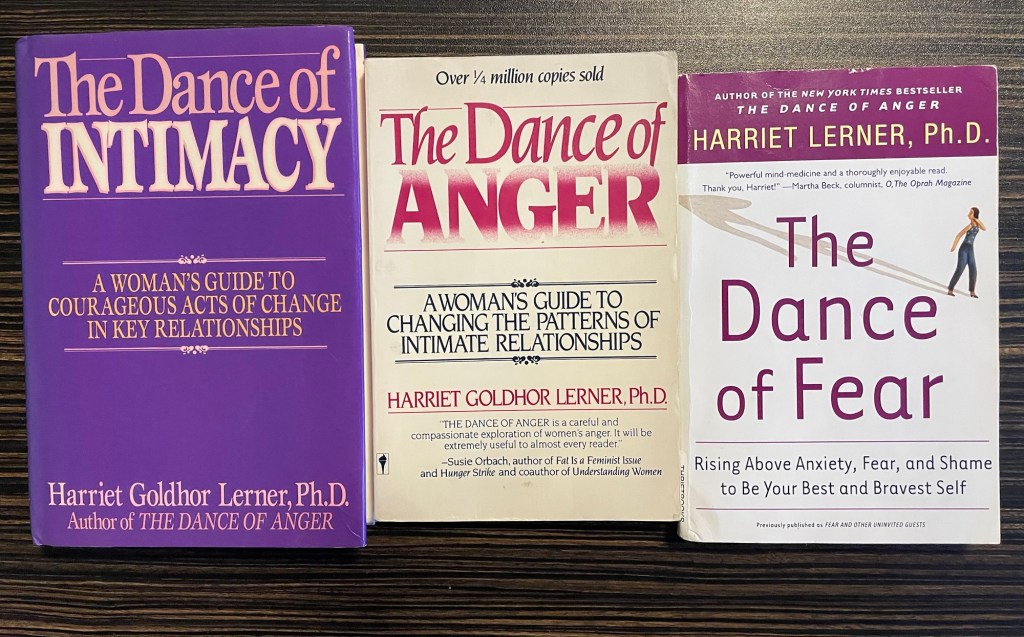
Harriet Lerner’s trilogy—The Dance of Intimacy, The Dance of Anger, and The Dance of Fear—delves into the intricate emotional dances we engage in within relationships, exploring how we navigate intimacy, anger, and fear. Each book, while focusing on a different core emotion, shares Lerner’s signature style: accessible, compassionate, and practical, with deep psychological insight.
In The Dance of Intimacy, Lerner explores the complexities of building and maintaining close, authentic relationships—whether they be with partners, family, or friends. She highlights how our early family dynamics shape our approach to intimacy, often leading us to either over-function (trying to fix others) or under-function (becoming overly dependent). The book offers tools for developing boundaries, asserting yourself, and stepping out of these dysfunctional patterns to create healthier, more fulfilling relationships. Lerner’s emphasis is on the balance between autonomy and connection, showing readers how to navigate this delicate dance.
The Dance of Anger is arguably Lerner’s most famous work, and for good reason—it tackles anger, an emotion many women (and people in general) are taught to suppress or handle poorly. The book encourages readers, particularly women, to reframe anger as a valuable tool for personal growth and relationship change. Instead of venting or suppressing it, Lerner suggests using anger as a guide to identifying unmet needs and unspoken truths in relationships. She provides practical strategies for expressing anger constructively while maintaining respect for both oneself and others. The message is empowering: anger, when used effectively, can lead to clarity and stronger, healthier relationships.
The Dance of Fear addresses the paralyzing effects of anxiety and fear in our personal and professional lives. Whether it’s fear of failure, rejection, or vulnerability, Lerner shows how these emotions can hold us back from leading authentic, courageous lives. She draws from real-life stories and psychological research to offer strategies for confronting fear head-on, rather than allowing it to dictate our actions. By embracing fear and seeing it as a natural part of growth, readers can develop resilience and move forward in life despite uncertainty and discomfort.
Across all three books, Lerner uses a combination of personal anecdotes, client stories, and psychological theory to make her points relatable and digestible. Her tone is warm, nonjudgmental, and empathetic, which makes readers feel seen and understood. A common thread throughout the trilogy is the importance of self-awareness and emotional responsibility—Lerner empowers readers to recognize their own patterns, take ownership of their feelings, and make conscious changes to create healthier, more satisfying relationships.
Though each book focuses on a different emotion, together they form a cohesive guide to understanding and improving our emotional lives. Lerner’s work stands out for its focus on relational dynamics, particularly in the context of family and romantic partnerships, and for its emphasis on how our emotional responses are shaped by both our past and our current relationships.
In short, Lerner’s books are invaluable resources for anyone looking to better understand themselves, improve their relationships, and navigate the challenges of intimacy, anger, and fear with grace and self-compassion.
 REFLECTIONS ON LIFE AND WHAT IT MEANS TO LIVE FULLY...
Leave a comment