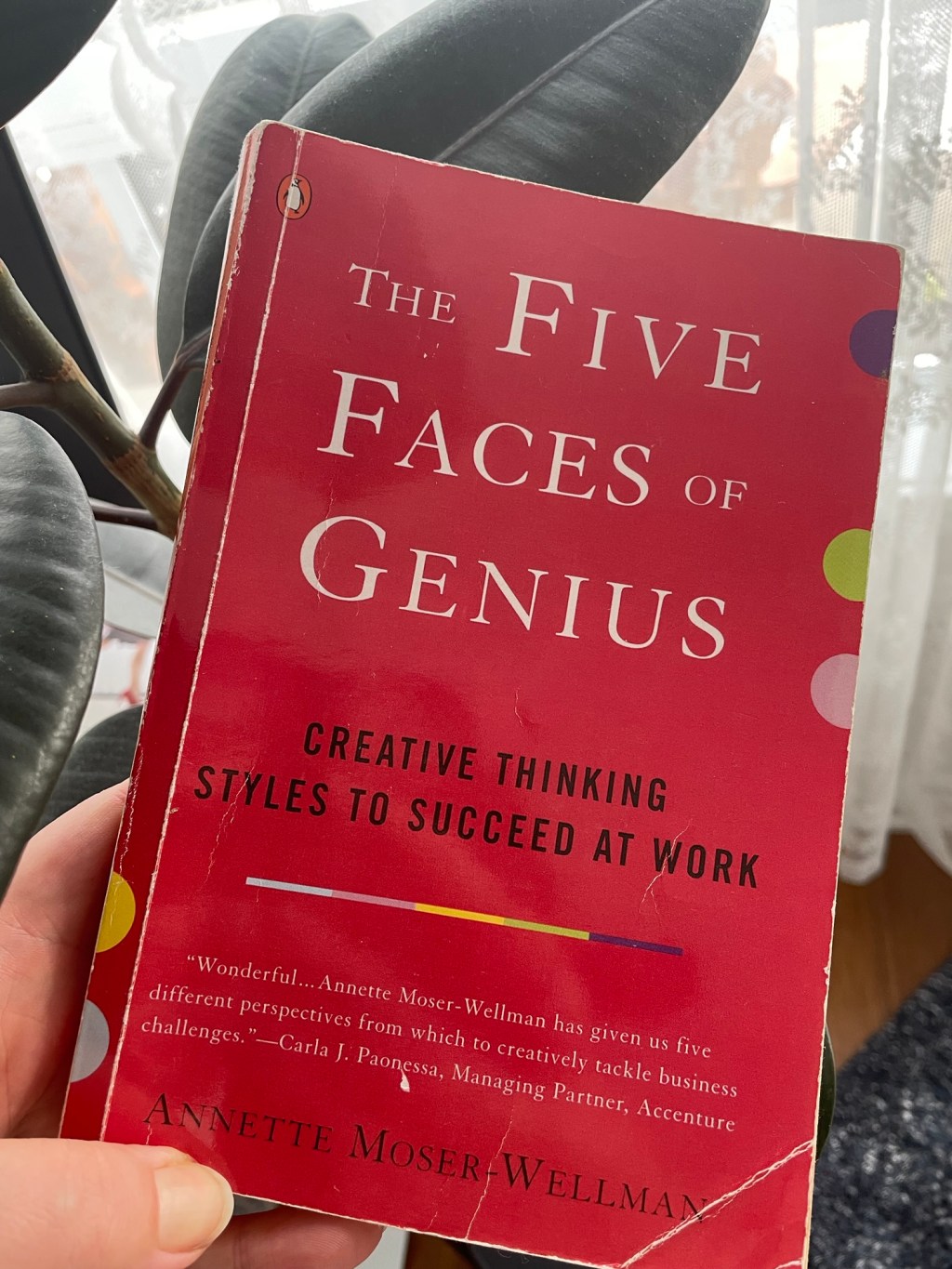
Book Review: The Five Faces of Genius by Annette Moser-Wellman
The Five Faces of Genius by Annette Moser-Wellman offers a refreshing take on creativity, presenting a framework that helps individuals identify and harness their unique creative potential. Unlike many books that paint creativity as an elusive trait reserved for artistic or visionary types, Moser-Wellman breaks it down into five distinct “faces” or styles, demonstrating that creativity comes in many forms and can be cultivated by anyone.
As someone interested in personal growth and innovation, this book felt like a practical guide to unlocking creativity in various ways. Moser-Wellman doesn’t just focus on the stereotypical image of the lone creative genius. Instead, she presents five archetypes that represent different aspects of creativity—each with its own strengths, approaches, and ways of thinking. These archetypes are the Seer, the Observer, the Alchemist, the Fool, and the Sage. By understanding these faces, we can see how different types of creativity manifest and how to tap into our personal strengths to solve problems, generate new ideas, and drive innovation.
The Seer represents visionary thinking—those who see things others don’t and bring new concepts to life. The Observer excels at finding meaning in patterns and details, while the Alchemist transforms ordinary experiences into extraordinary results, much like a chemist creating something entirely new from basic elements. The Fool challenges the status quo by questioning assumptions and breaking down barriers, while the Sage draws on wisdom and knowledge to find creative solutions rooted in experience.
What I found particularly valuable about this framework is its practicality. Moser-Wellman encourages readers to recognize which of these faces comes most naturally to them and how to strengthen the others. It’s not about being locked into one type but learning to expand your creative toolkit by developing all five faces. This idea resonated with me, as it made creativity feel more accessible—something I could actively work on rather than waiting for inspiration to strike.
The book also offers plenty of real-world examples and case studies, showing how these creative types have been used by influential leaders, artists, and innovators to achieve breakthroughs in their fields. Moser-Wellman’s writing is engaging and filled with relatable stories that make the concepts come alive. Whether she’s talking about business leaders, scientists, or artists, she demonstrates how creativity is essential to problem-solving and success across all domains.
One of the biggest takeaways for me was the idea that creativity is not a fixed trait—it’s something that can be nurtured, practiced, and applied in everyday life. Whether you’re brainstorming new ideas at work, trying to overcome personal challenges, or simply looking for ways to think differently, the framework in The Five Faces of Genius gives you tangible ways to do so.
That said, the book’s structure might feel a bit formulaic for some readers. It’s clear that Moser-Wellman has a specific methodology she wants to convey, and while that provides clarity, it may feel repetitive or predictable in places. However, this doesn’t detract from the overall message—especially for readers looking for concrete methods to enhance their creativity.
In summary, The Five Faces of Genius is a compelling and useful book for anyone looking to better understand and develop their creative abilities. Moser-Wellman’s approach helps demystify creativity, breaking it down into actionable, identifiable forms. If you’ve ever felt that creativity is out of reach or limited to a certain type of person, this book will help you see that there’s a creative genius within everyone—you just need to recognize the face it wears.
 REFLECTIONS ON LIFE AND WHAT IT MEANS TO LIVE FULLY...
Leave a comment